Leaving Nepal: A sobering Journey

The 7.9 earthquake that struck Nepal on the 25th April brought our Himalayan adventure to an abrupt end. The idea of pushing ahead with our plans and trekking to EBC where so many had just lost their lives seemed like a tasteless option. Unable to offer the skills to help with the initial disaster relief effort, we were left wondering what to do for the best. But with constant tremors, predictions of earthquakes of a bigger magnitude, the threat of disease spreading and supplies running low, we reluctantly made the difficult decision to leave behind a crumbing Country which had captured our minds and stolen our hearts.

Abandoning the picturesque lakeside village of Pokhara, we set off on a four hour journey through winding lush green valleys to the devastation and chaos of Kathmandu. It was to be the most sobering journey of our lives.

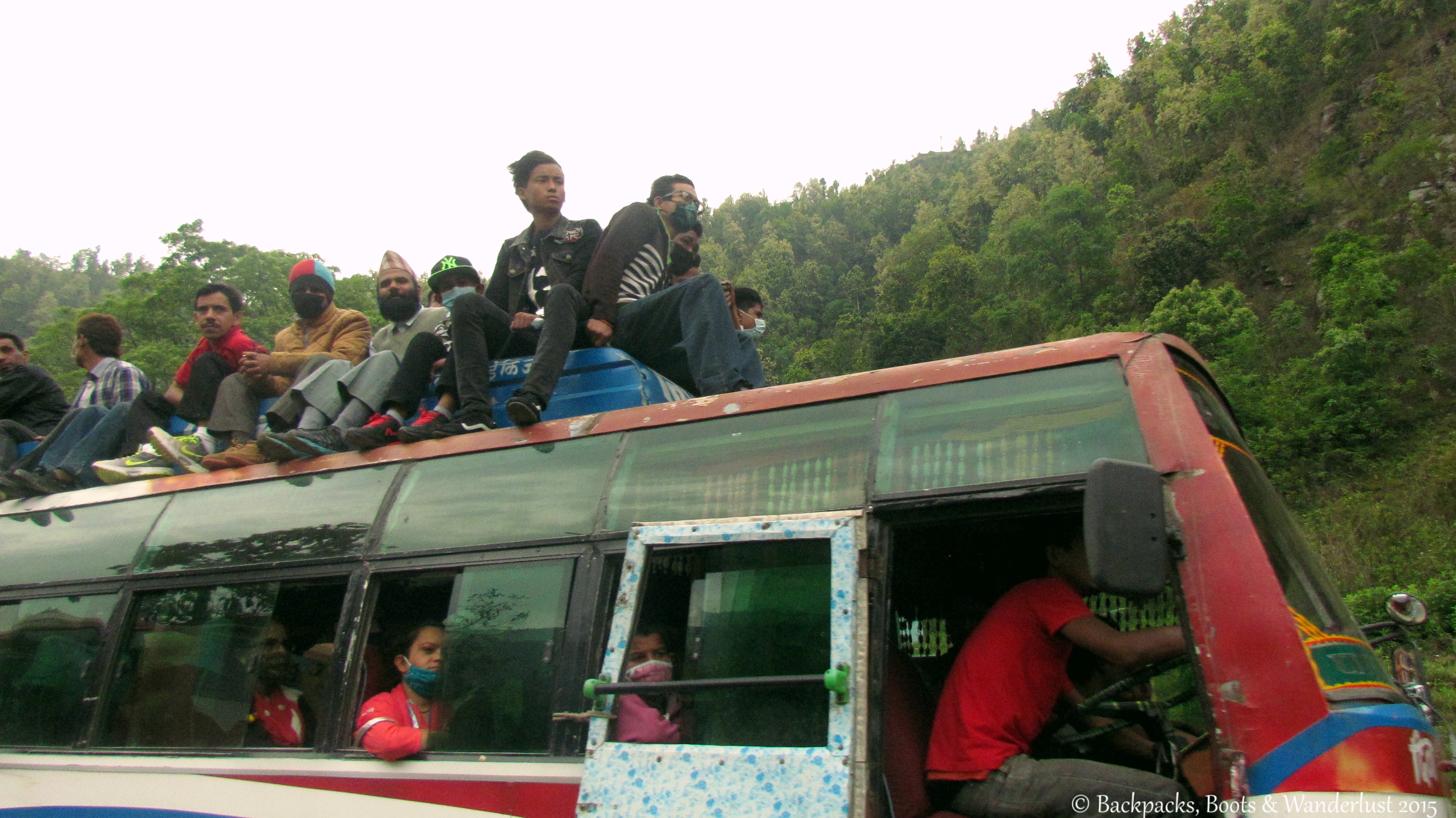
Desperate locals taking to the roofs of buses to flee Kathmandu

Desperate locals taking to the roofs of buses to flee Kathmandu

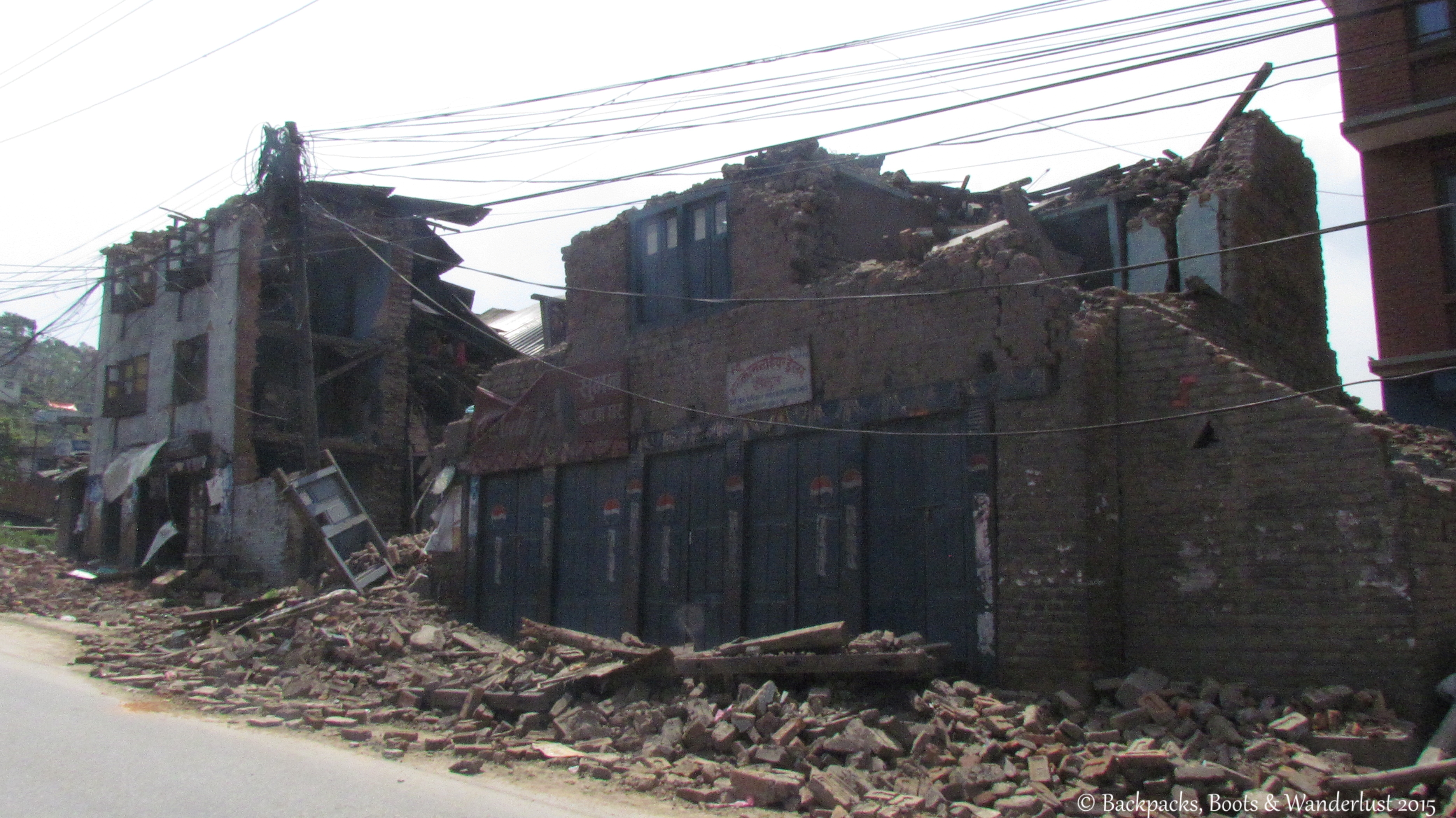
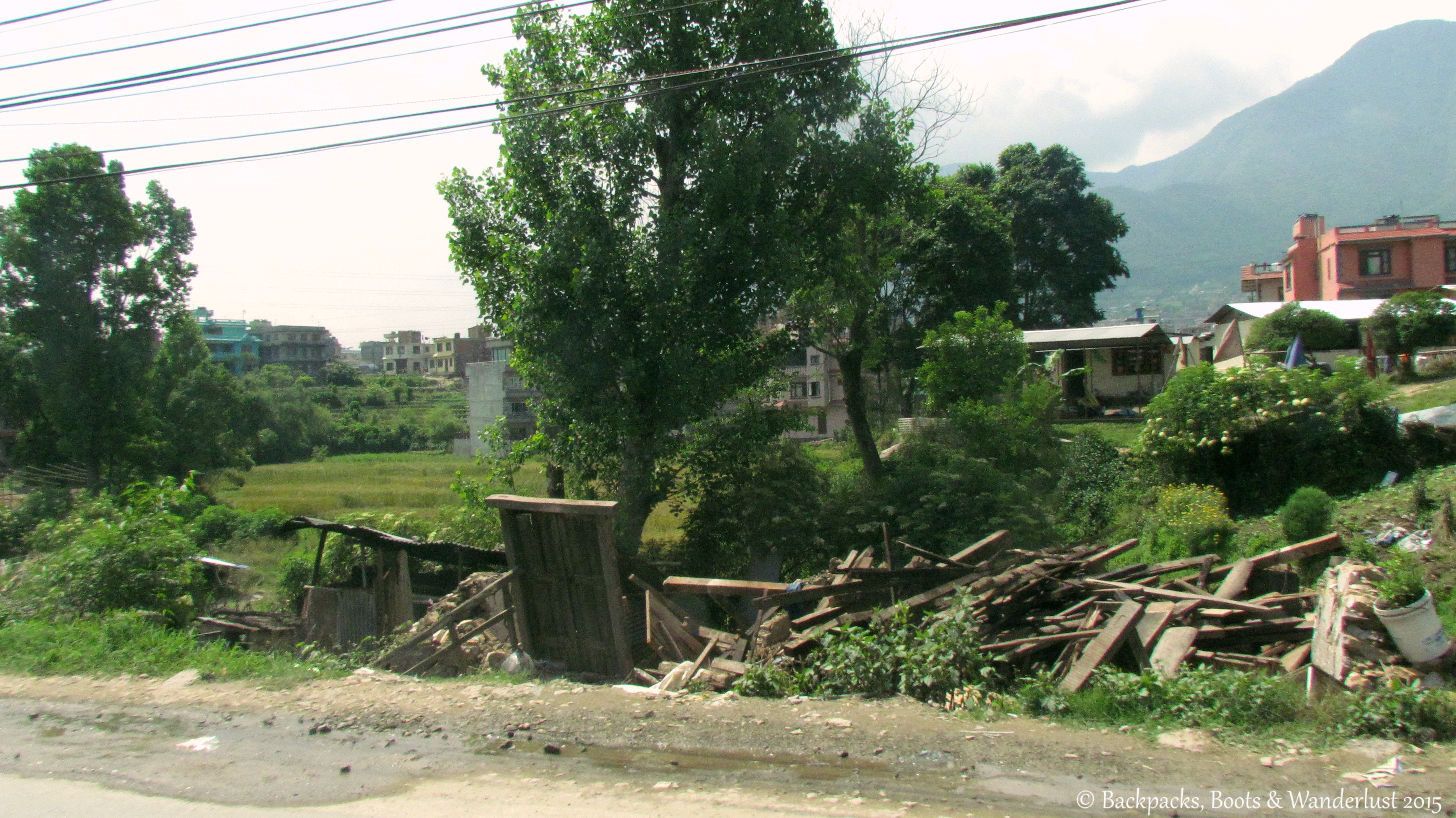
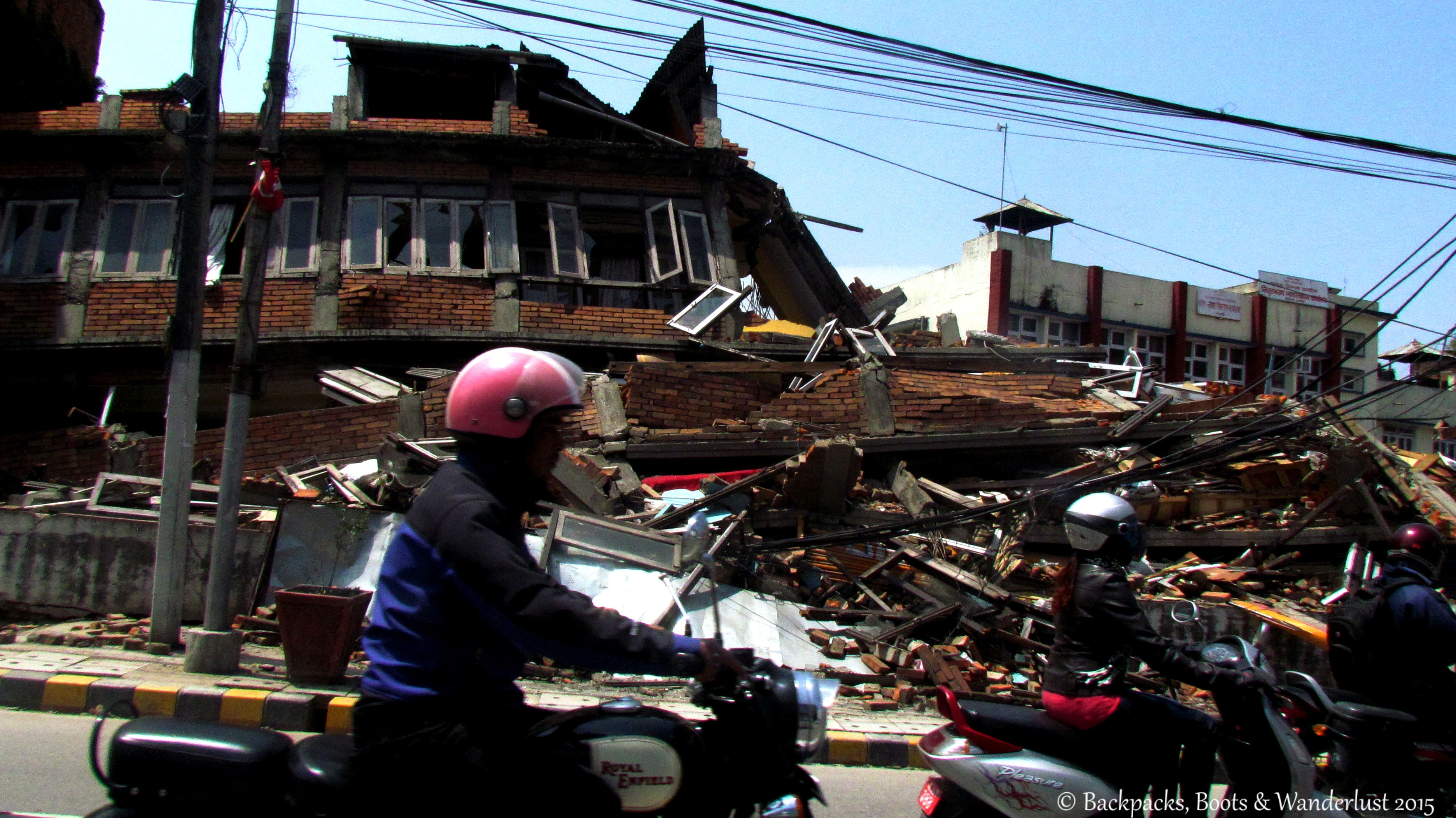
Passing by villages that were now nothing more than a pile of rubble; houses which balanced preciously on their side like tumbling dominoes, and squadrons of soldiers bearing shovels, we realised how sheltered we had been in the largely unaffected area of Pokhara.

Nepali earthquake three

Nepali earthquake five Nepali earthquake one

Nepali earthquake four

Arriving safely at Kathmandu Airport we had a long wait amongst the hordes of fleeing tourists and Government Officials until our delayed flight would leave the ground. Sat on the floor, I thought over what I had just seen and our privileged decision to leave. I felt sick to the stomach. These beautiful people had lost everything. Their homes, their livelihoods, their loved ones. Everything! And we were deserting them in their hour of need to look after ourselves. I had never felt more selfish.

Later that evening, teary eyed and exhausted we flew out of Nepal just ten days after the biggest quake to hit the Himalayas in over 80 years.

And so began the next chapter of our travelling adventure.

The Annapurna Circuit: An Epic Himalayan Adventure

Throng La

Hailed as one of the most spectacular long distance walks in the world, The Annapurna circuit had a lot to live up to. But, our 130 odd mile horseshoe trek through Nepal’s central Himalaya region more than exceeded any of our expectations.

This popular trail may lack the lavish huts and sense of isolated wilderness offered by other treks around the world, it may not even have the best scenery; but what it does offer is the opportunity to explore an ever changing landscape, stand in the shadows of four of the world’s highest snow-capped peaks, and to experience the kindness and cultures of the communities who, despite adversity, inhabit these unforgiving lands.

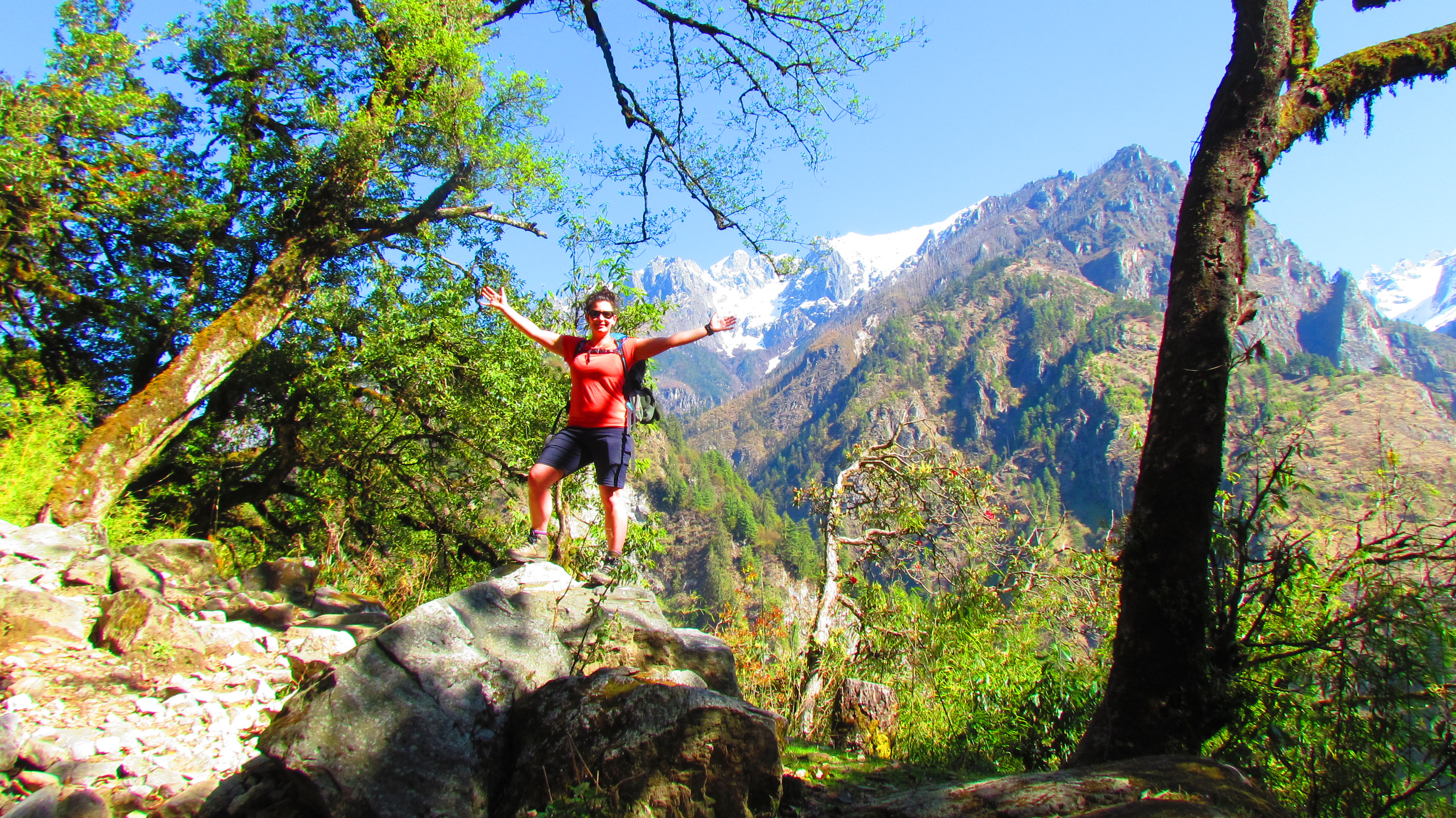
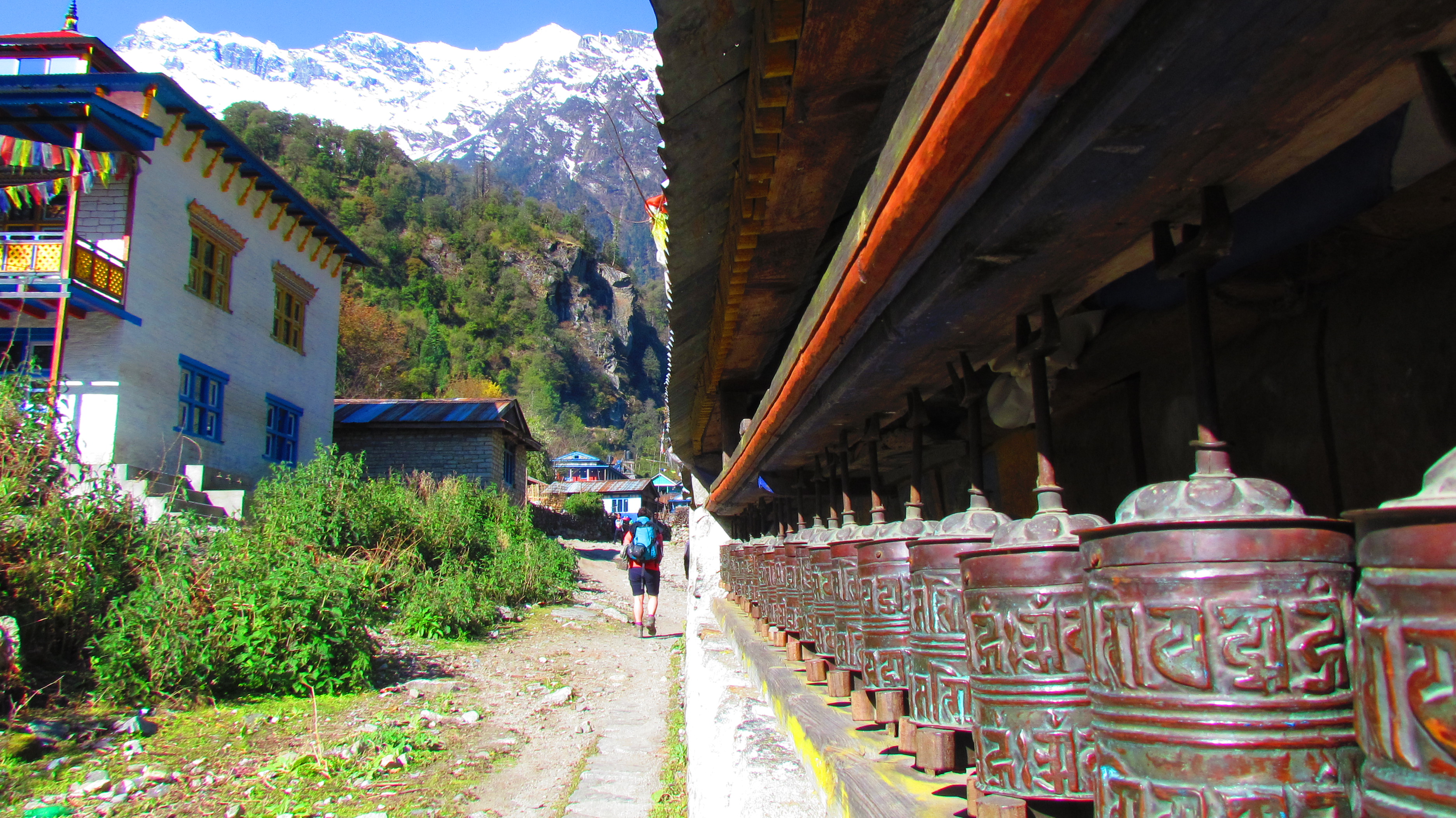
The first 5 days of our 18 day journey from Besisahar to Nayapul were spent trekking towards the source of the mountain river Marshyangdi. We crossed wooden swing bridges which swayed precariously over the sapphire rapids below; walked beneath cascading waterfalls; meandered through rice paddies carved into the climbing countryside; scaled sweet smelling rhododendron forests; and were left astonished by the ingenuity of the farming villages we called home each night. And too be honest, it all felt a little too easy. It was nothing like the white washed Himalayas which I had seen on TV and the views although beautiful, could easily have been rivalled by some of our favourite spots in England’s Lake District.

Rice terraces IMG_4680IMG_4561IMG_4660

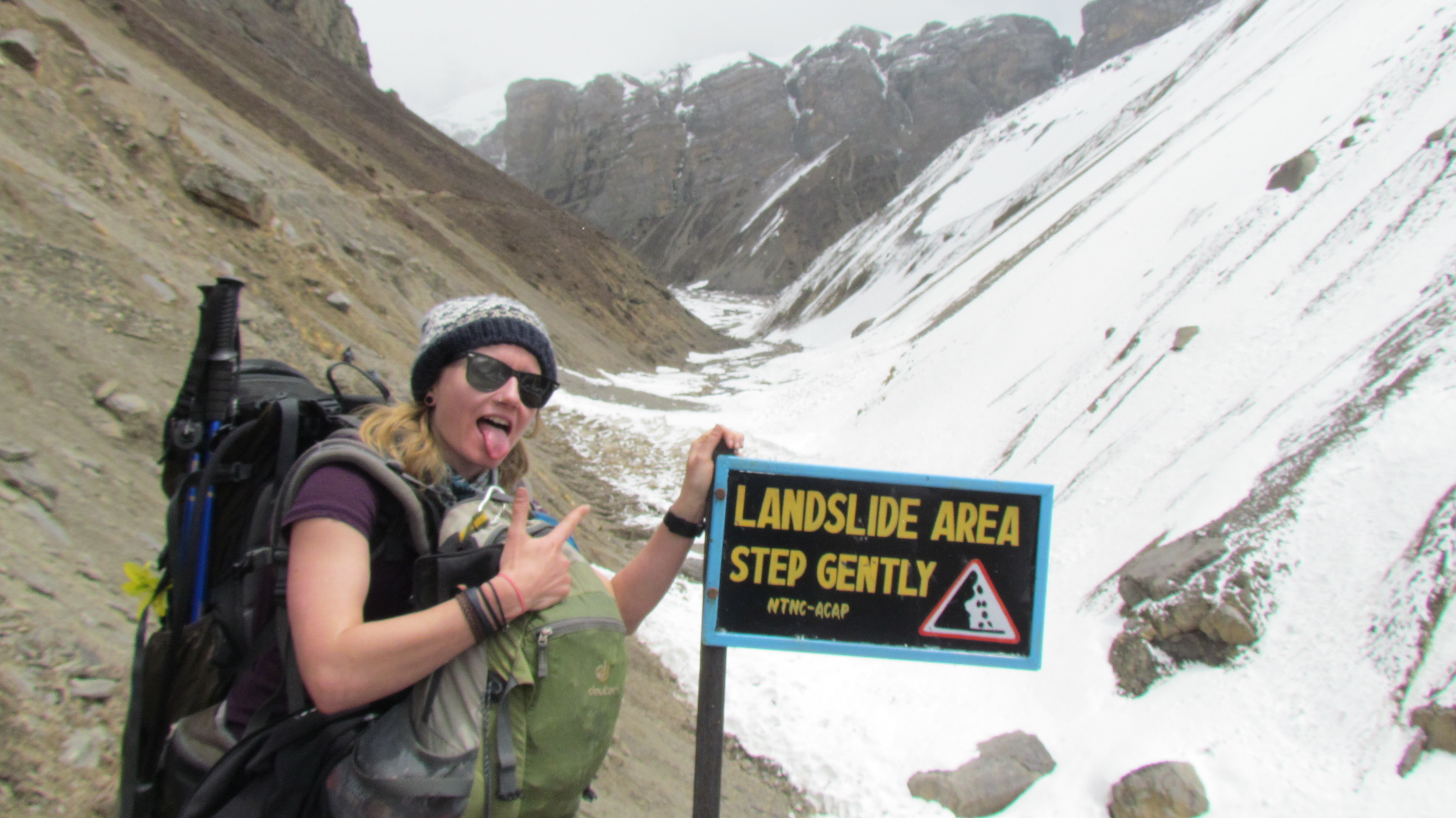
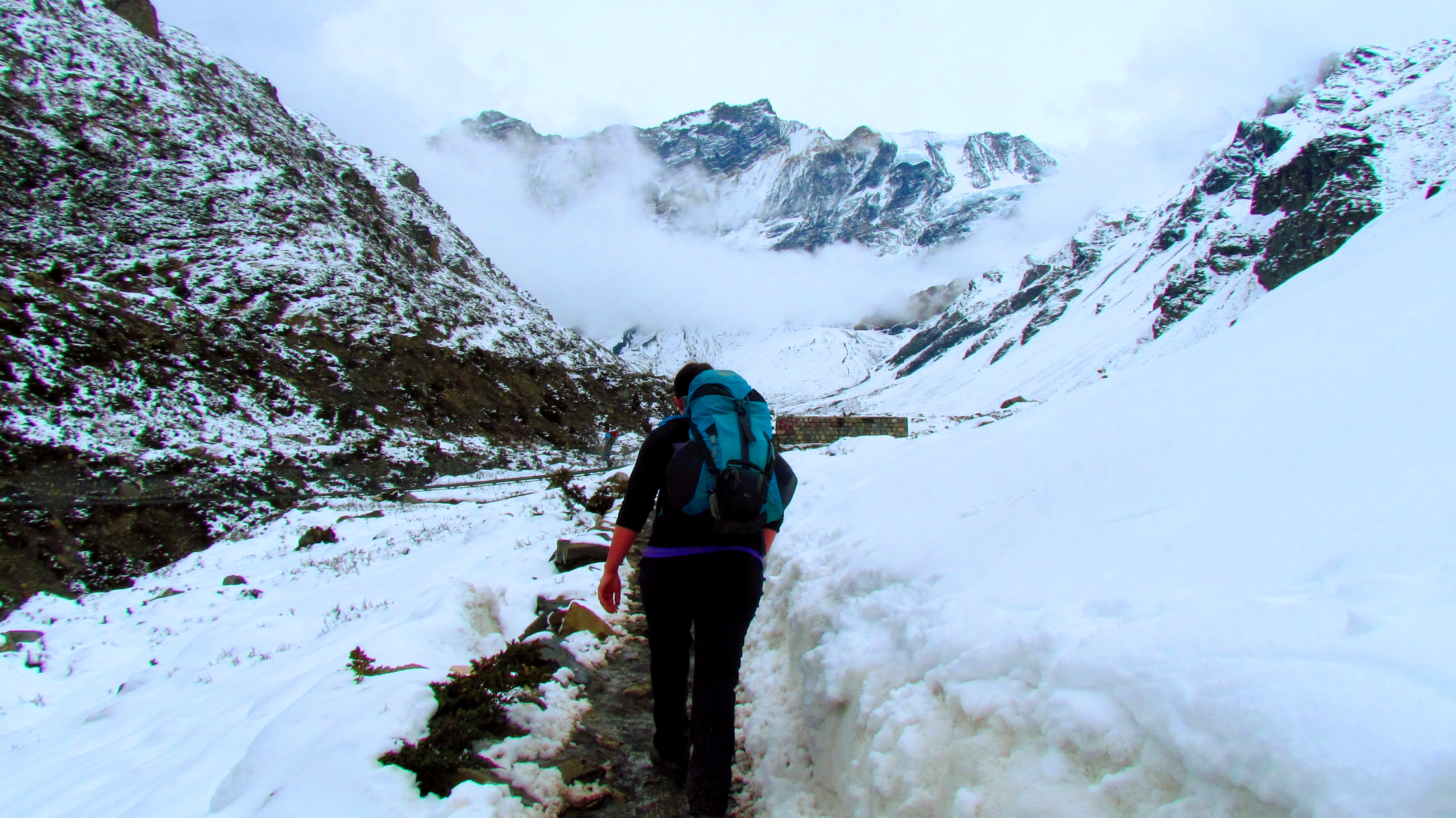
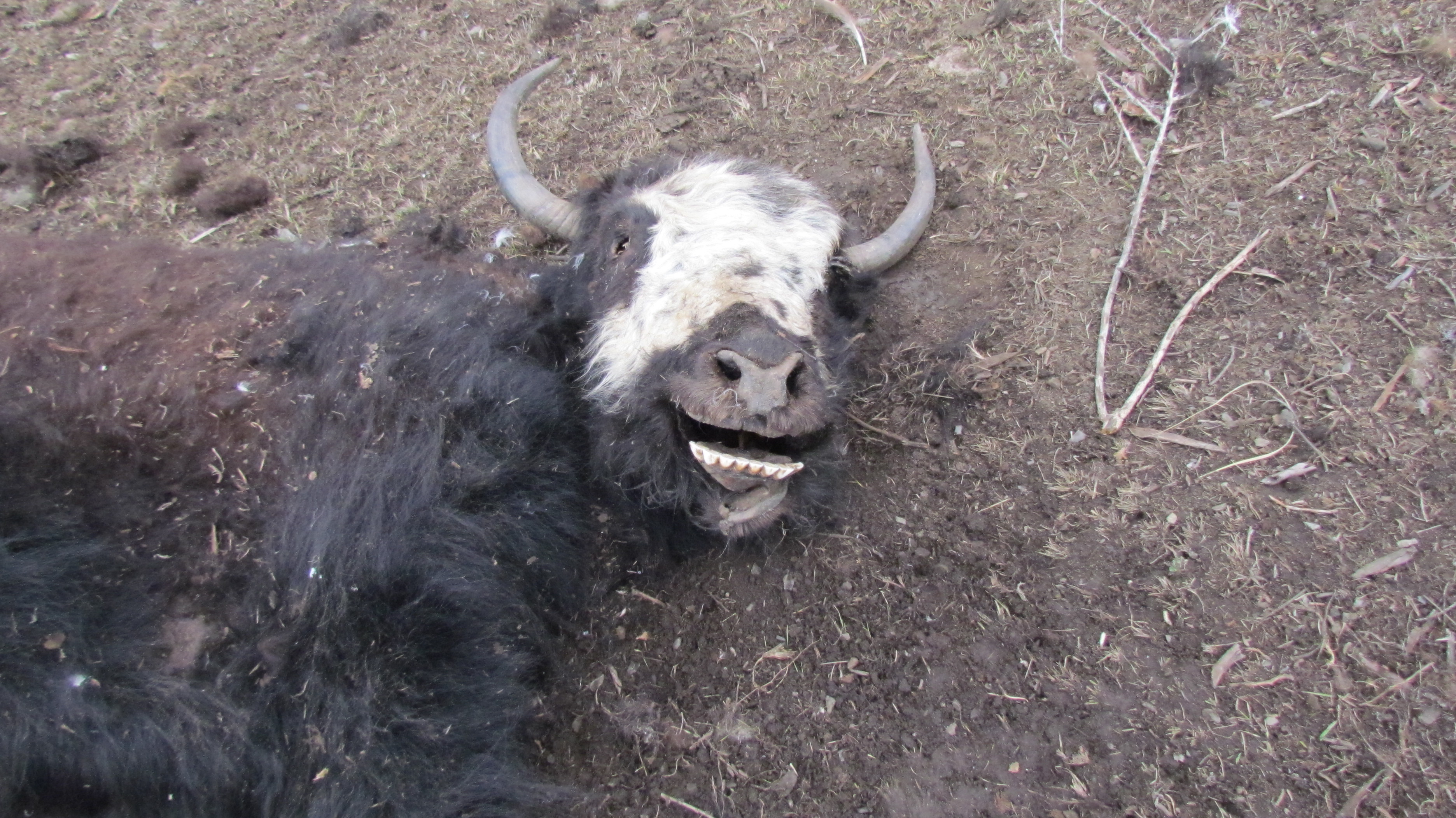
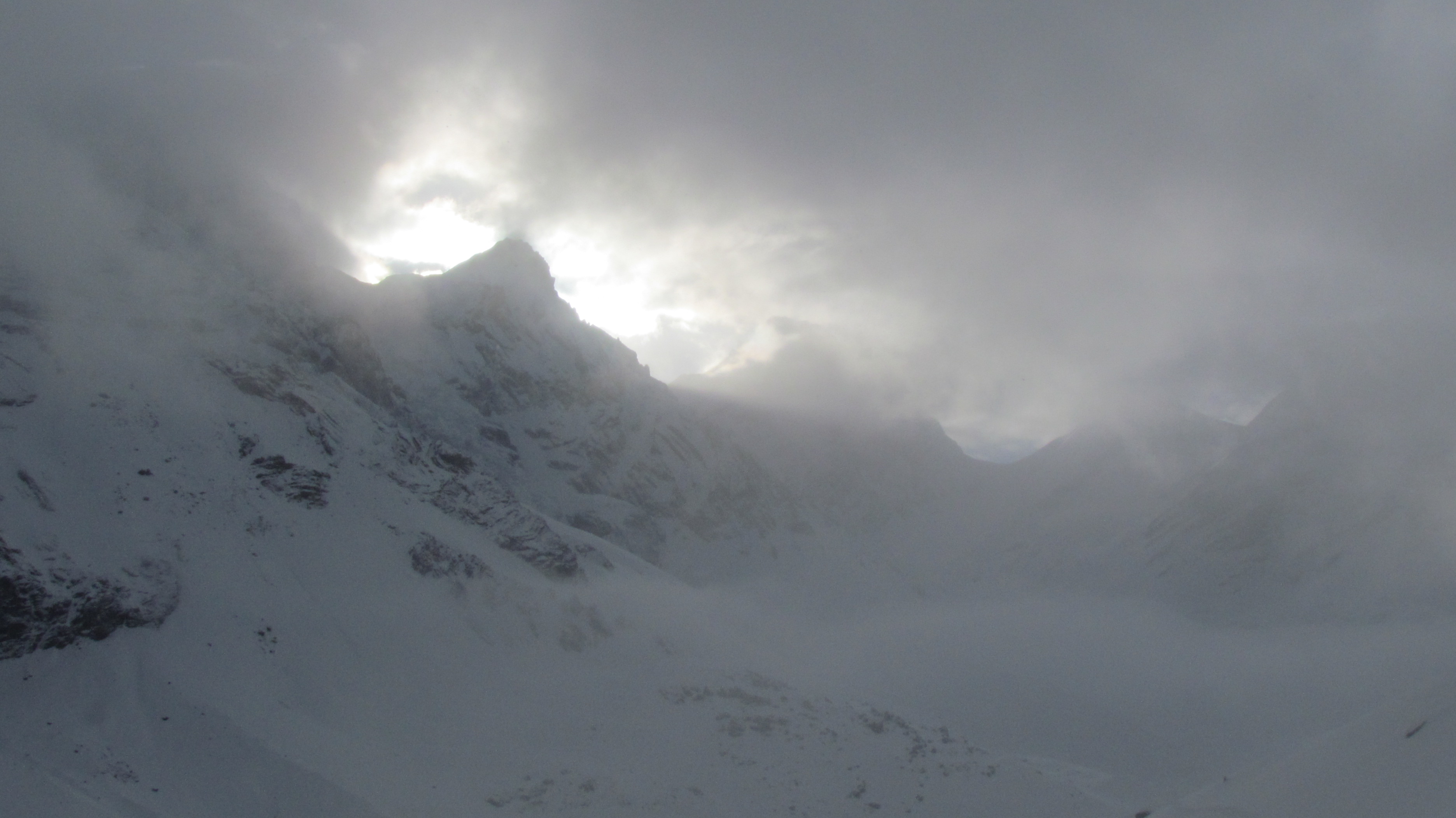
But on day six as we left the village of Chame at an altitude of 2630m and began to ascend further towards the climax of our journey, the infamous Thorong-la Pass, the terrain began to drastically change. Spindrift and threatening clouds now loomed above a skyline dominated by grey and white soaring walls of intimidating rock. Vultures circled overhead, preying on the frozen remains of Yaks which had been taken by the harsh alpine conditions. Boulders crashed and tumbled down the fell-side around us, whilst the thunderous noise of distant avalanches echoed in our ears. It was a stark contrast from the blue skies and lush green vegetation of the valleys and foot hills below. And with every step we took, we became all too aware of each shortening intake of breath in the thinning ar. It was as if the mountains had sent a glaring reminder of the hostile environment which we had chosen to explore, and of how dispensable and insignificant we are. We were at the full mercy of the greatest mountain range on the planet, and it had decided to send a blizzard our way.

VultureIMG_5215snowIMG_5194

Likened to that which killed over 40 trekkers in October 2014, the snow fall caused what seemed to be a panic amongst Sherpa’s in Menang village, with many groups, guides and porters abandoning their treks and heading downhill to the safety of the valleys below. But determined to make the pass, others like ourselves decided to wait out the storm in the sub- zero temperatures of the wafer-thin walled tea houses in hope of a break in the weather, and after just two days we were blessed with just that.

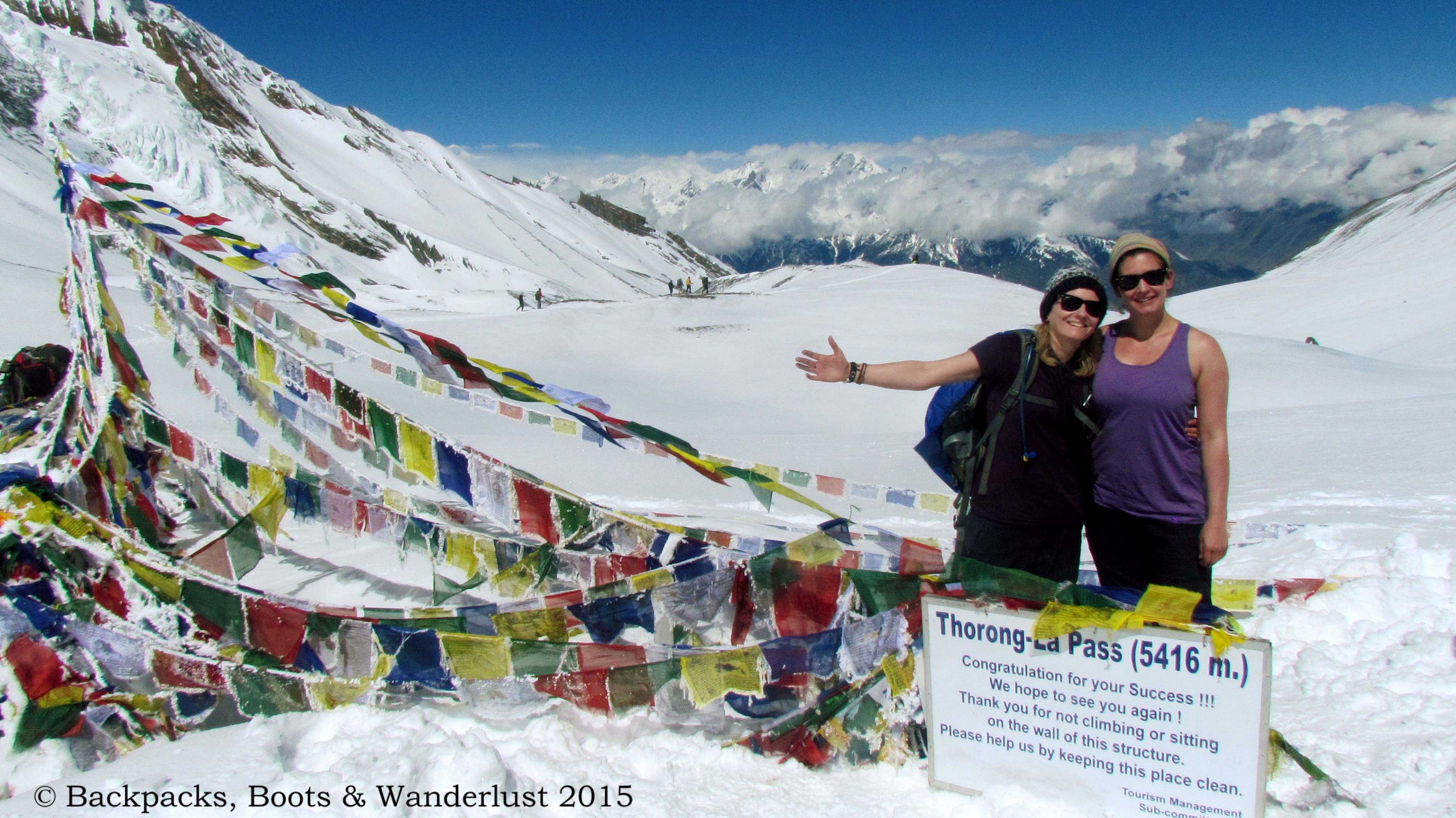
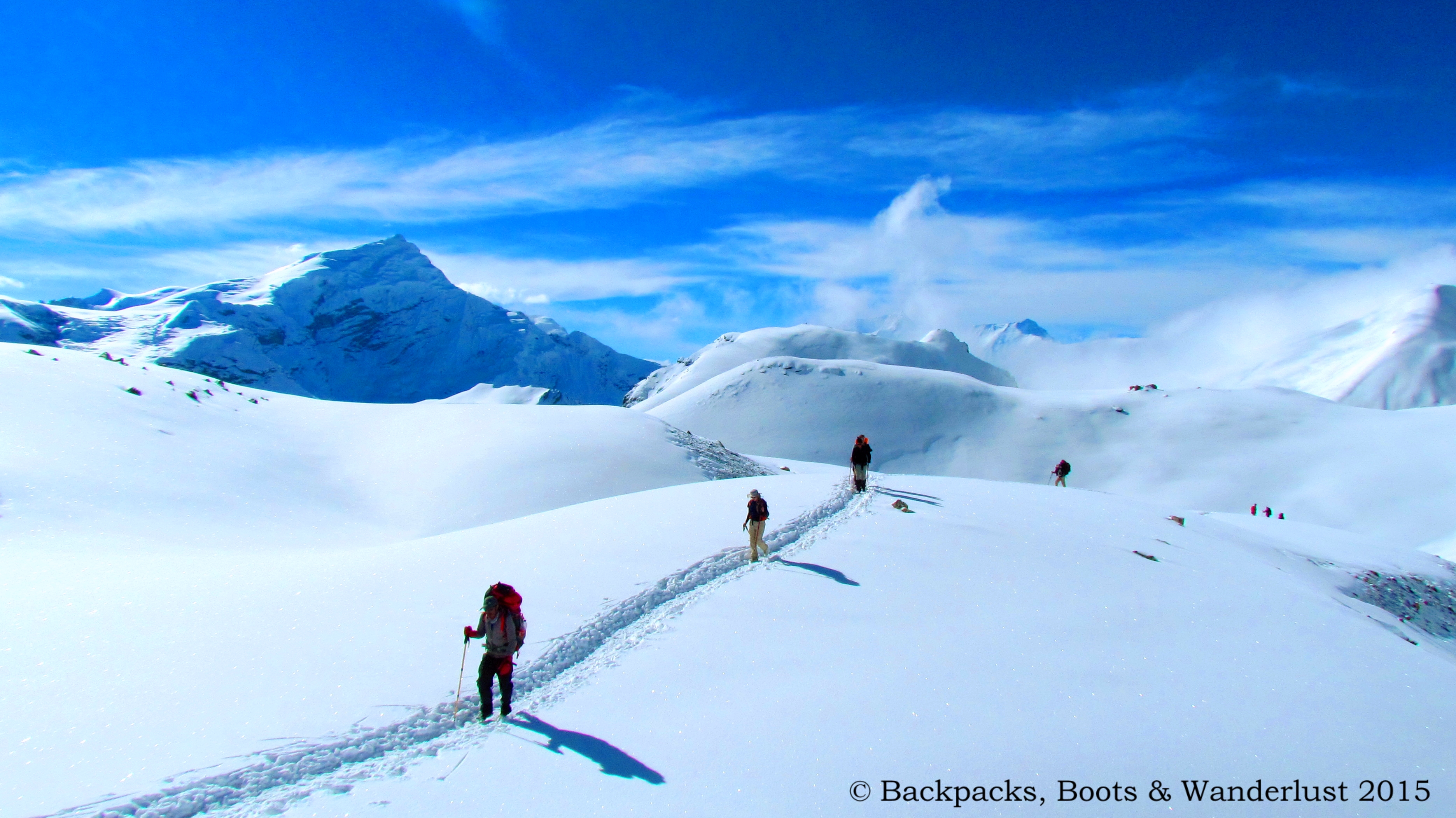
The track now covered in thick snow, compacted by an endless stream of trekkers had become treacherous under foot. For those struggling with altitude sickness like Danielle, each movement became a slow and painful slog to the fluttering prayer flags of Thorong- La Pass.

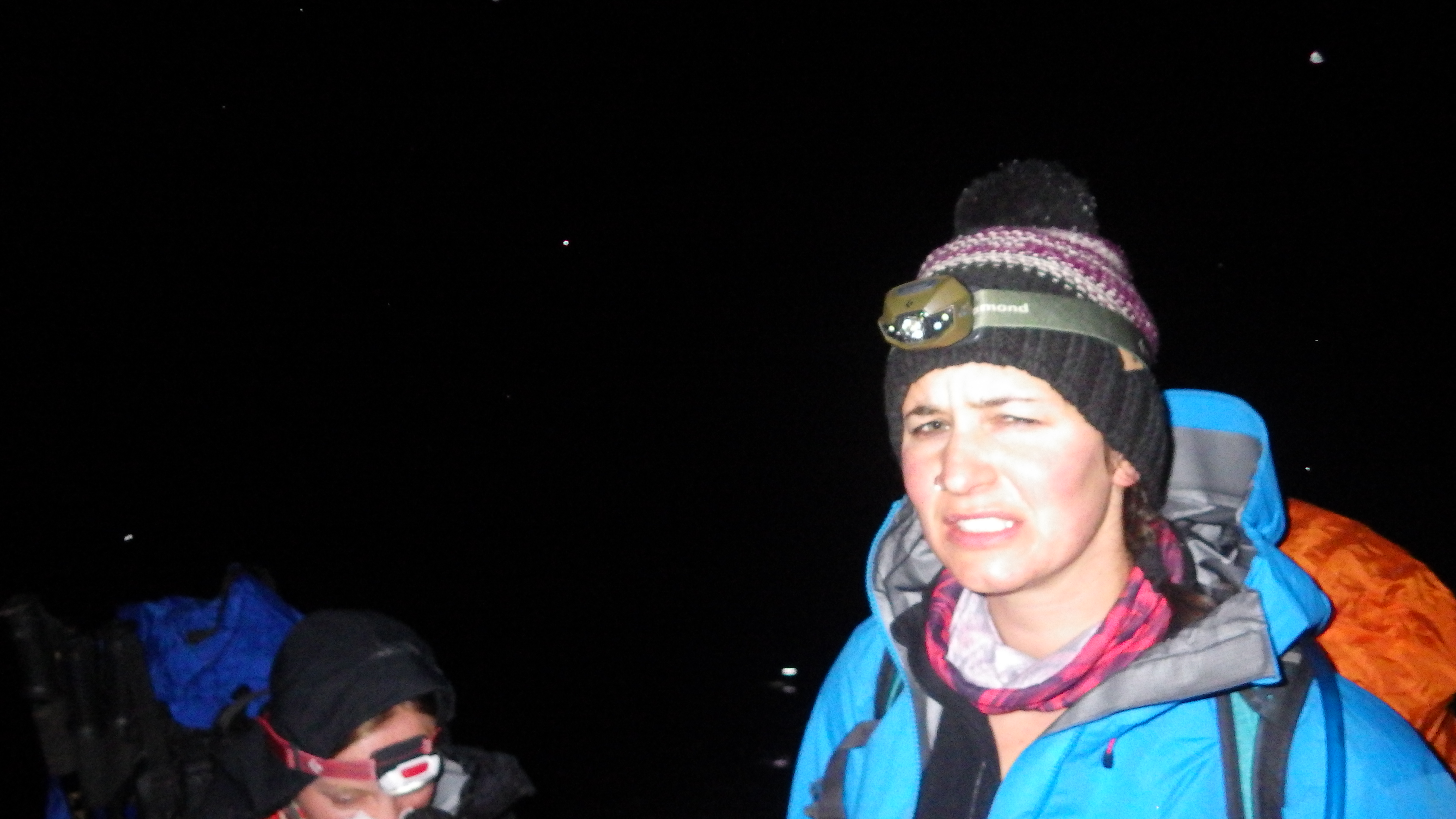
To avoid high winds and melting snow, the final ascent was made in the dead of the night. Guided by only the flickering light of our head torches, we pushed on uphill through a landscape now undistinguishable and eerily quiet.

IMGP4527 IMG_5249

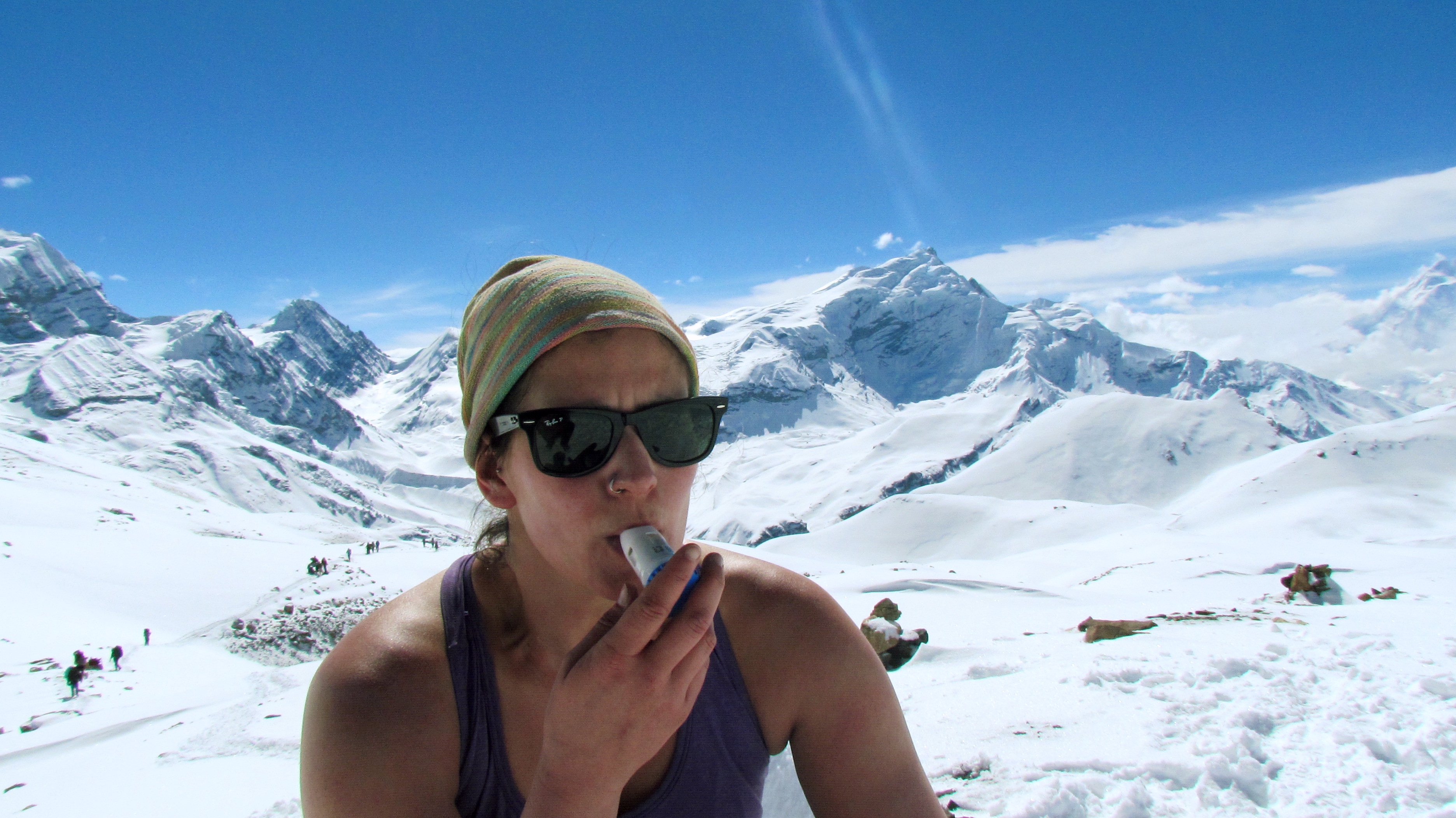
But as dawn broke, the darkness faded to reveal a 360 degree view of soaring Himalayan peaks. Stood at 5416m on a blanket of glistening snow, we were rendered speechless. Nothing compared to the scale and beauty of this picture perfect scene. Not skydiving over Franz Josef glacier; not an aerial view of the Great Barrier Reef; not swimming with Whale Sharks. Nothing could ever compare to this. It was nature at it most beautiful and it was truly breath taking.

IMG_5334 Inhaler

hymalayas 2

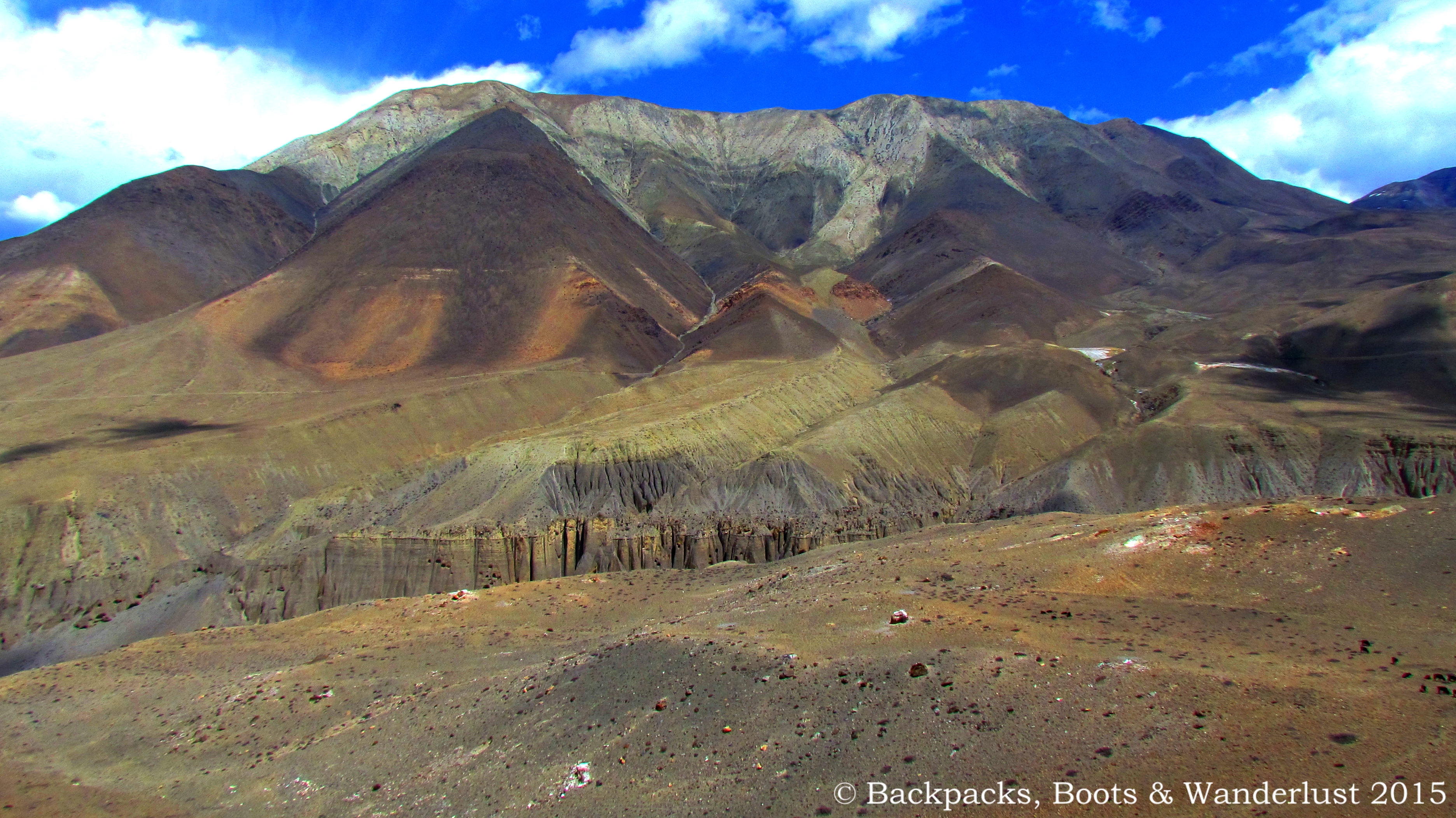
The decent from Throng La was a long and arduous five hours of slipping and sliding down hill, but for us the adventure was far from over. Continuing on from Muktinath where the majority of trekkers end their Annapurna experience, the trail led us through Nepal’s arid semi desert land where we searched the river banks for ancient fossils; plentiful apple orchids where we feasted on pie; and sweat inducing sub-tropical rain forests where we heard the calls of the Cuckoo bird, before eventually leading us to our penultimate destination of Poon Hill.

 desert IMG_5660

Apple orchards fossils

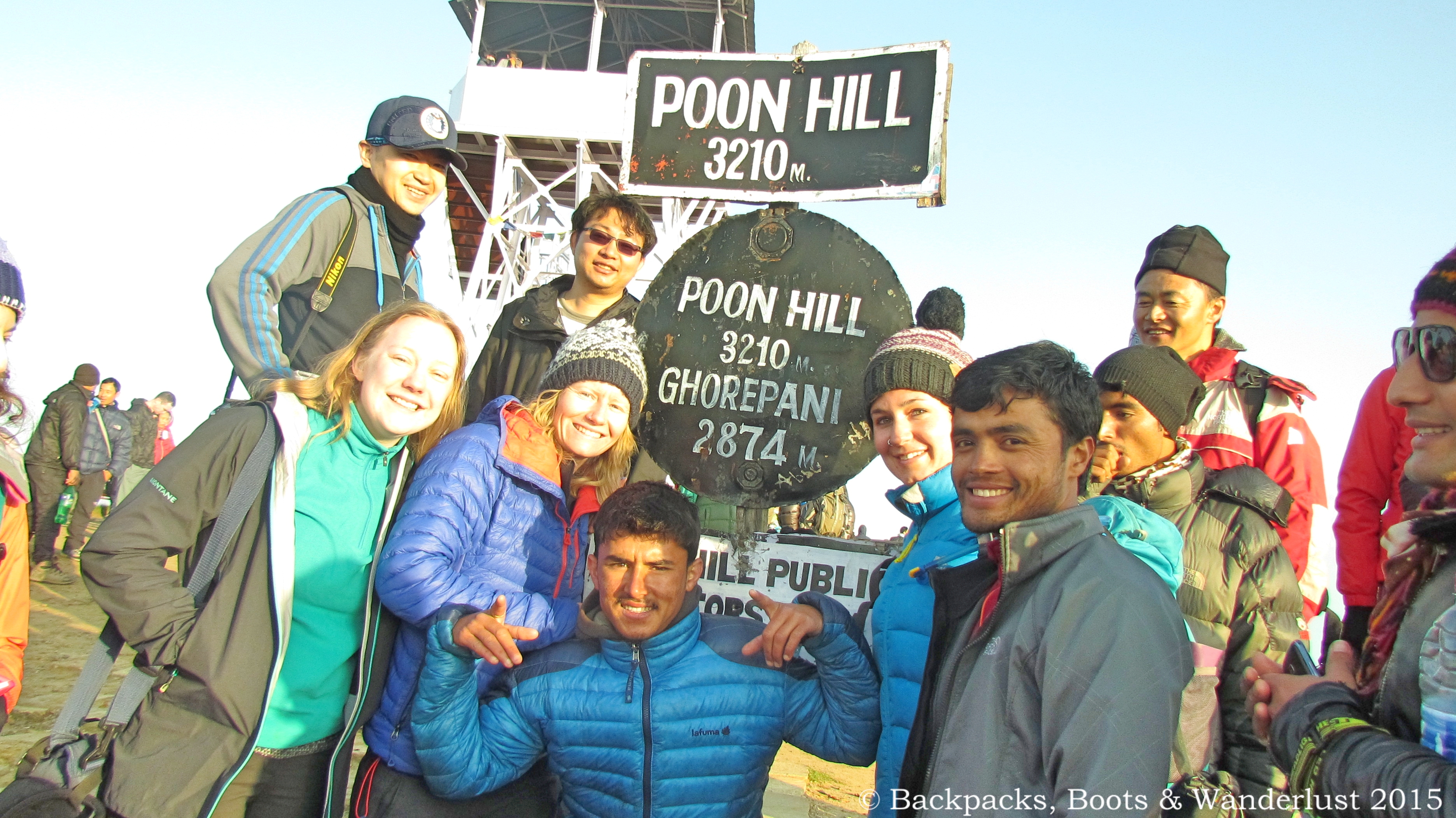
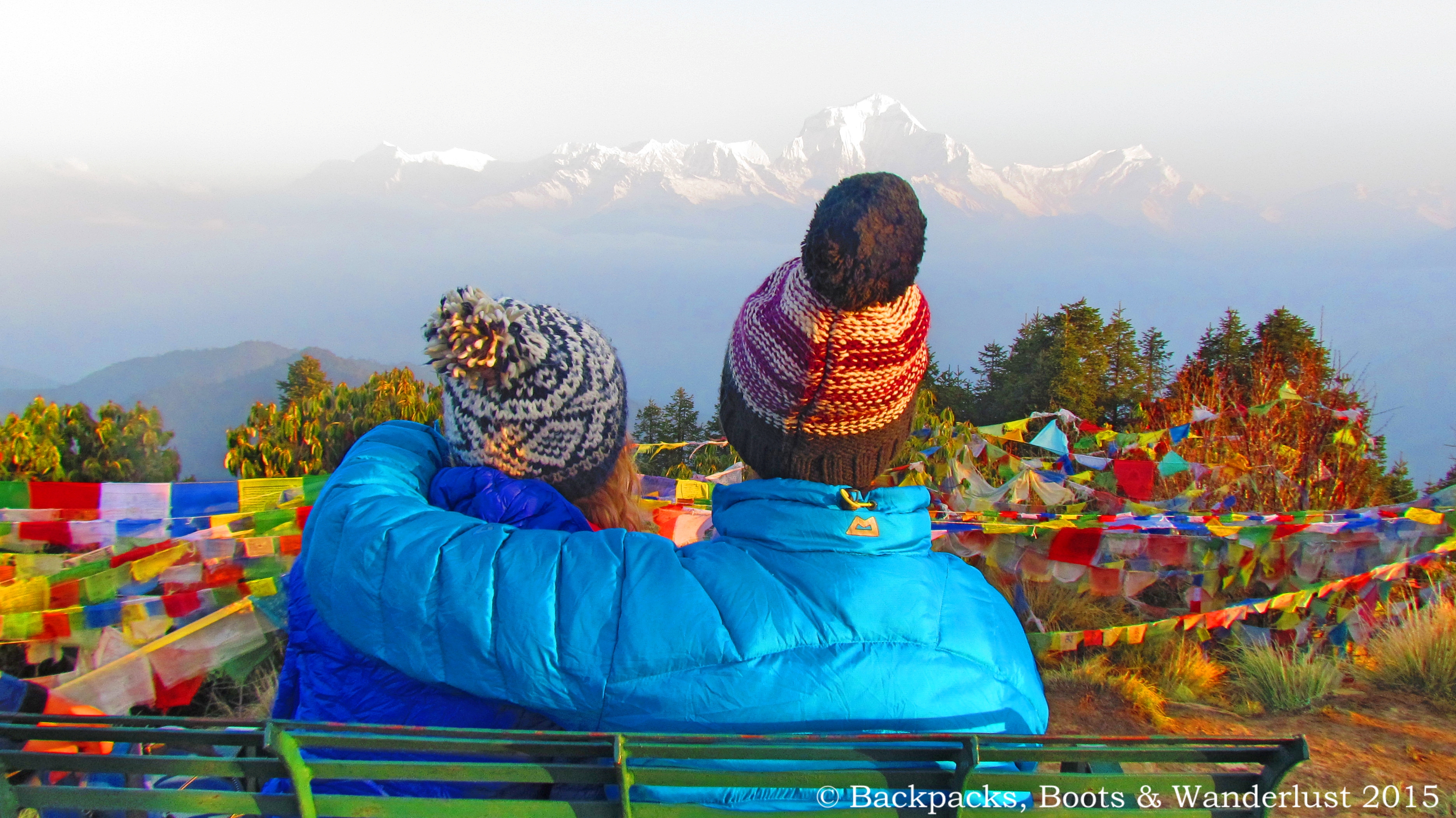
Here, after a 4am climb, we stood sharing a cup of steaming hot lemon, ginger and Honey tea as we watched the rising sun’s rays one by one touch the snow-capped peaks of the entire Annapurna range, creating a fiery orange Alpine glow across the horizon.

A majestic ending to a perfect Himalayan adventure.

Poon Hill POON HILL 1 Fishtail

10 signs you’ve made the leap from Novice Backpacker to practically a local in Asia

Arriving into Asia from a shiny, organised Western country which is paranoid about the spreading of disease can cause a bit of a culture shock for the average backpacker. The stenches of raw sewerage; the habitual spitting of phlegm; the fly-ridden “butcher” stalls laid out across the dirt streets. It can almost be too much to bare. But despite the initial feelings of skin crawling disgust, it can be surprising how quickly we become desensitized to our new surroundings. Here are ten tell-tale signs you will notice on your leap from novice backpacker to practically a local in Asia.

IMG_5221

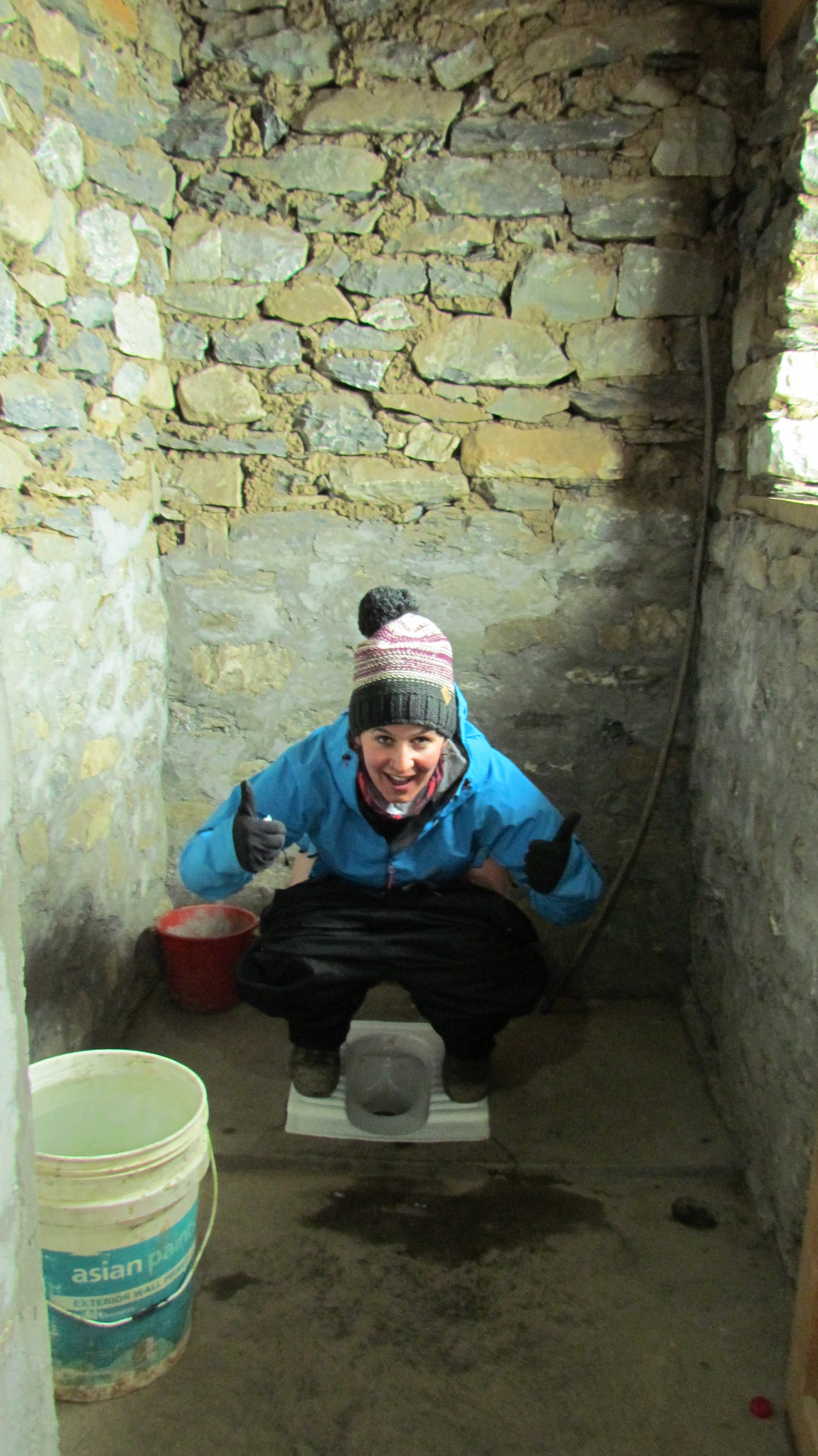
1. Given the choice between a drop toilet and the western-style equivalent, it’s a deep squat every time! You’ve gotten over the nose burning, eye watering smells that accompany that shallow hole in the floor maskerading as a W/C, and the fact that your more than likely going to be stairing at a bucket of someone else’s shitty tissues while you do your business. Instead you find comfort in the fact that you know what your getting. There’s no nasty’s hiding under a toilet seat and no dirty toilet water waiting to squirt out at you from an oddly plumbed ‘wanabe’ western device. It’s simple and effective! In fact you’re thinking “maybe I should get one of these installed when I eventually go home… if I ever go home?”

IMG_5586

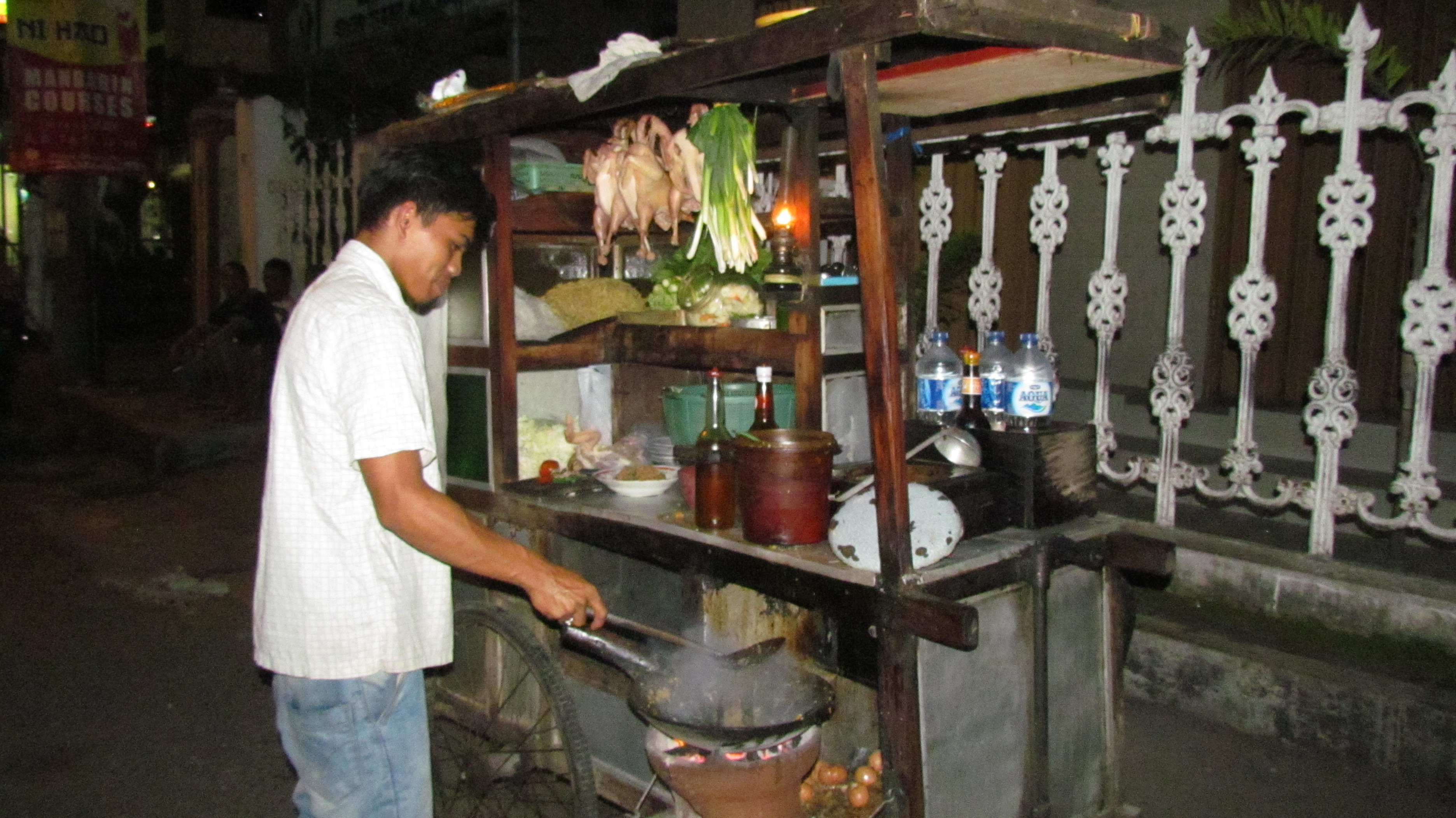
2. Curry for breakfast no longer seems like a crime. There’s no more raised eyebrows or nudges to friends as you pass by locals using their hand to shovel what should be a Saturday night takeaway into their mouths at 6 o’clock in the morning. Instead you’re now one of the first in the local Warung to be tucking into that mornings spicy delights and you cant get enough of it!!

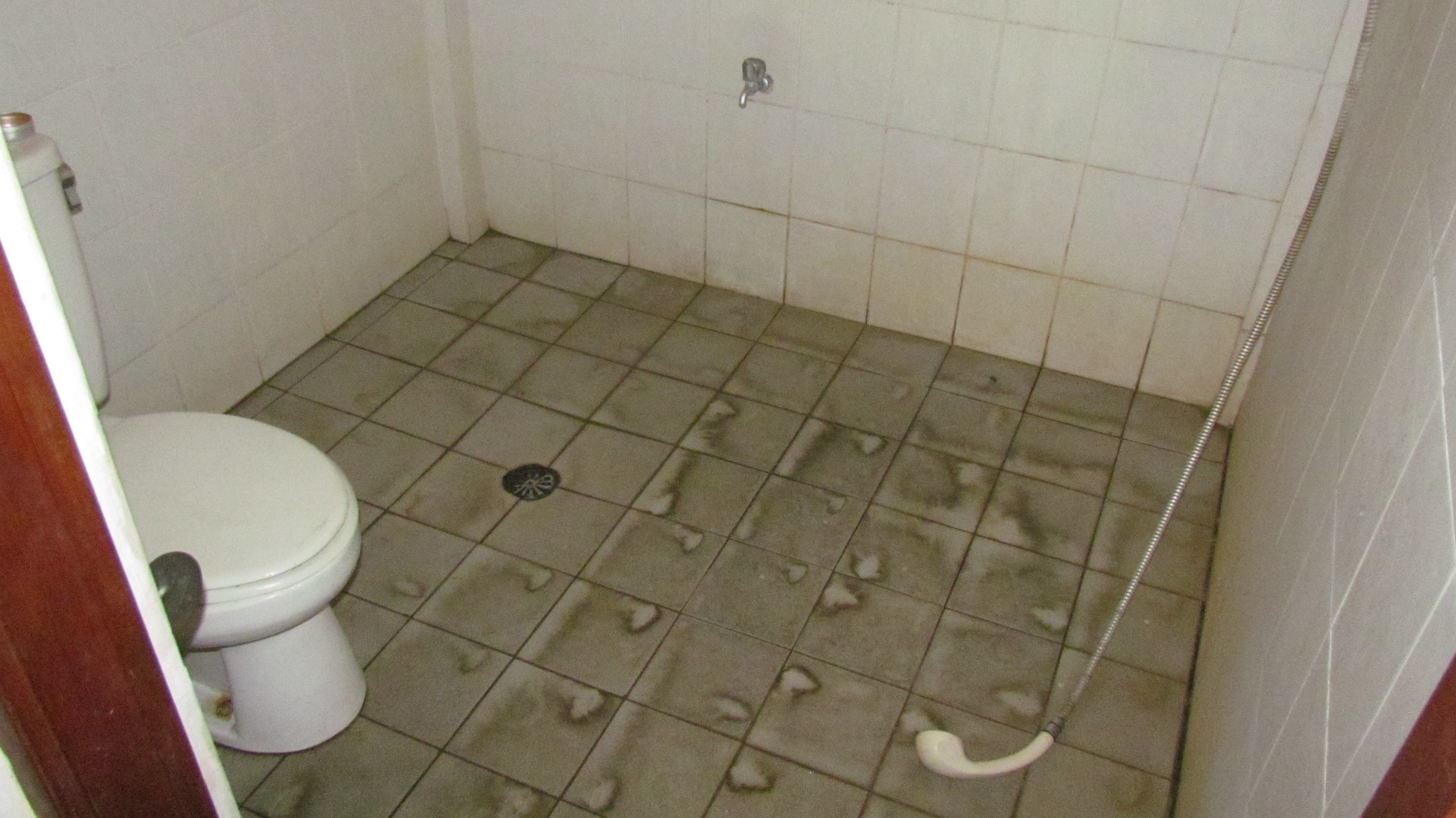
When you walk into this bathroom and say

When you walk into this bathroom and say “ahh this is so nice” without a hint of sarcasm… you know you’ve stayed in some rough ass places!!

3. Cold showers, stained bed sheets, dirty cutlery and electricity for only 6 out of the 24 hours in a day are now expected as standard.  You’ve stopped asking for things to be fixed or changed and realised there’s no need to be such a princess about it. You braved it and lived to tell the tale.

IMG_71064. You’ve stopped walking past those grubby looking local haunts and into the aesthetically pleasing western style bars that remind you of home. You’ve even stopped religiously dousing your hands in anti-bac before every feed. You’ve accepted the fact that your 700 times more likely to get the shits over here no matter where you eat, so you might as well pay a fraction of the price for that lovely little extra.

IMGP4716 5. Gone are the days of eating with knives and forks. Instead you are happy to ‘do as the locals do’ and tuck straight into your Dal Bhat or Tahli with your right hand. Your fingers drip with a concoction of lentil soup, potato curry and rice and it no longer feels like a novelty. Your back to basics and it’s like you never eaten any other way.

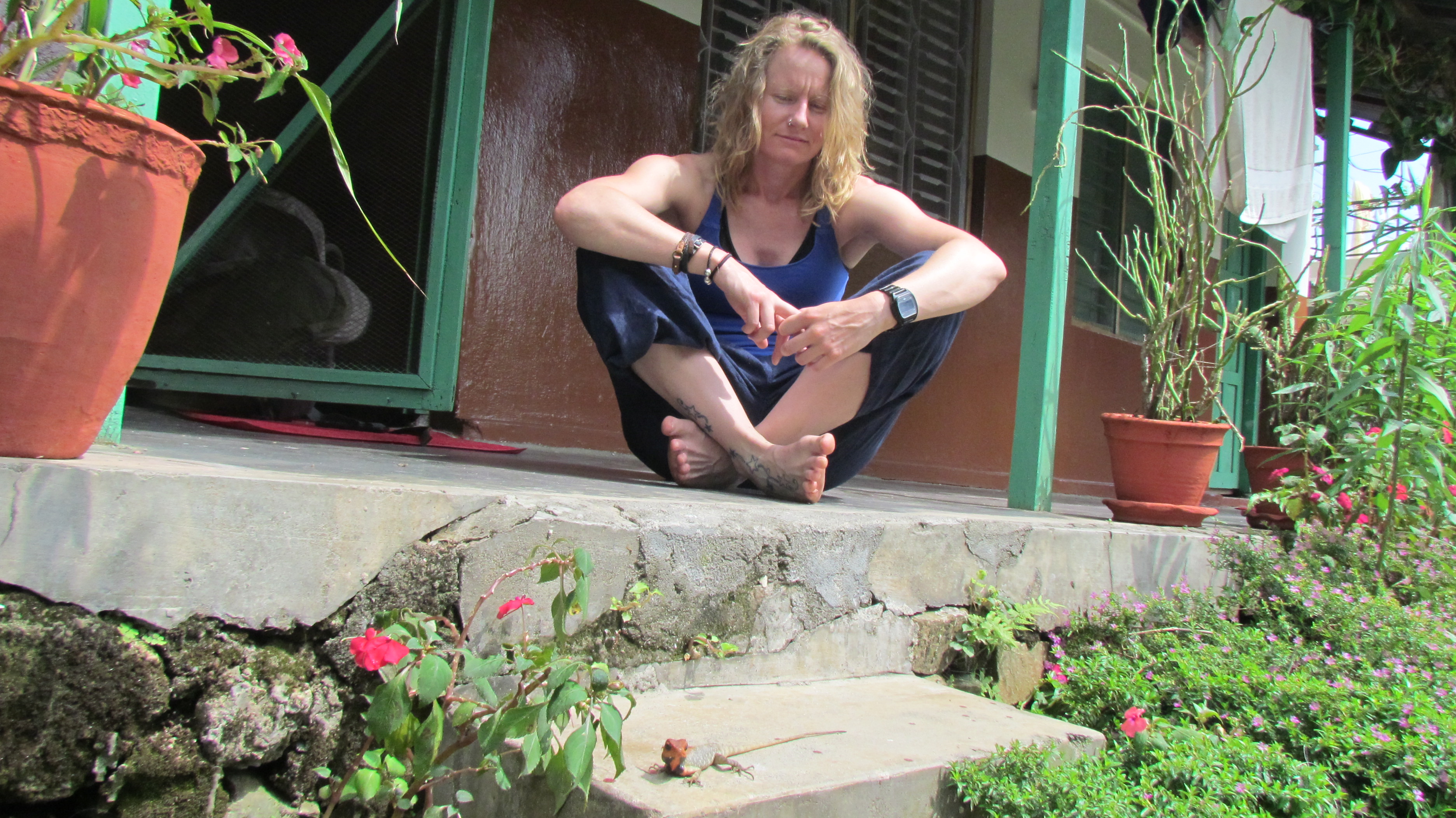
IMG_59196. Materialistic items and vanity seem ever less important. Straighteners and hairdryers lie untouched at the bottom of your backpack. In fact you’re not even sure when it was that you last saw your reflection in a mirror. Your hairs unkempt, your feet are always dirty and you barely ever wash your clothes, but you couldn’t care less. You’re just comfortable being you.

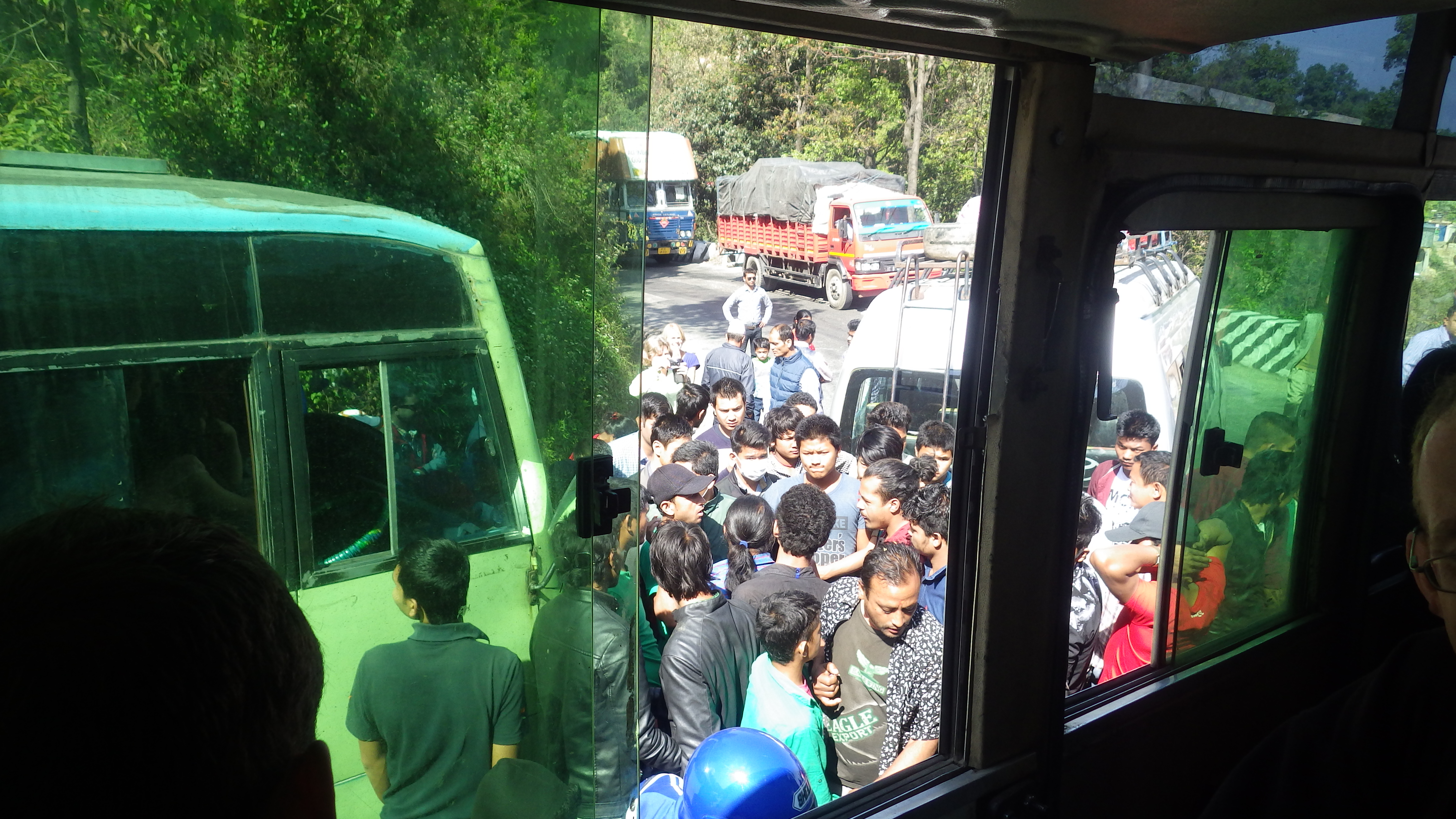
Navigating through onlookers after a bus had plummeted over a cliff edge, Nepal

Navigating through onlookers after a bus had plummeted over a cliff edge, Nepal

7. You no longer sit toes curled and knuckles white as your bemo driver weaves in and out of oncoming traffic, around blind cliff-edge corners on the wrong side of the road. Instead, you sit back and enjoy the views, safe in the knowledge that if the overcrowded, seatbelt-less tin can you are riding does crash or plummet down a hill side, you’ve not got a chance in hell, but at least you’ve had a good time.

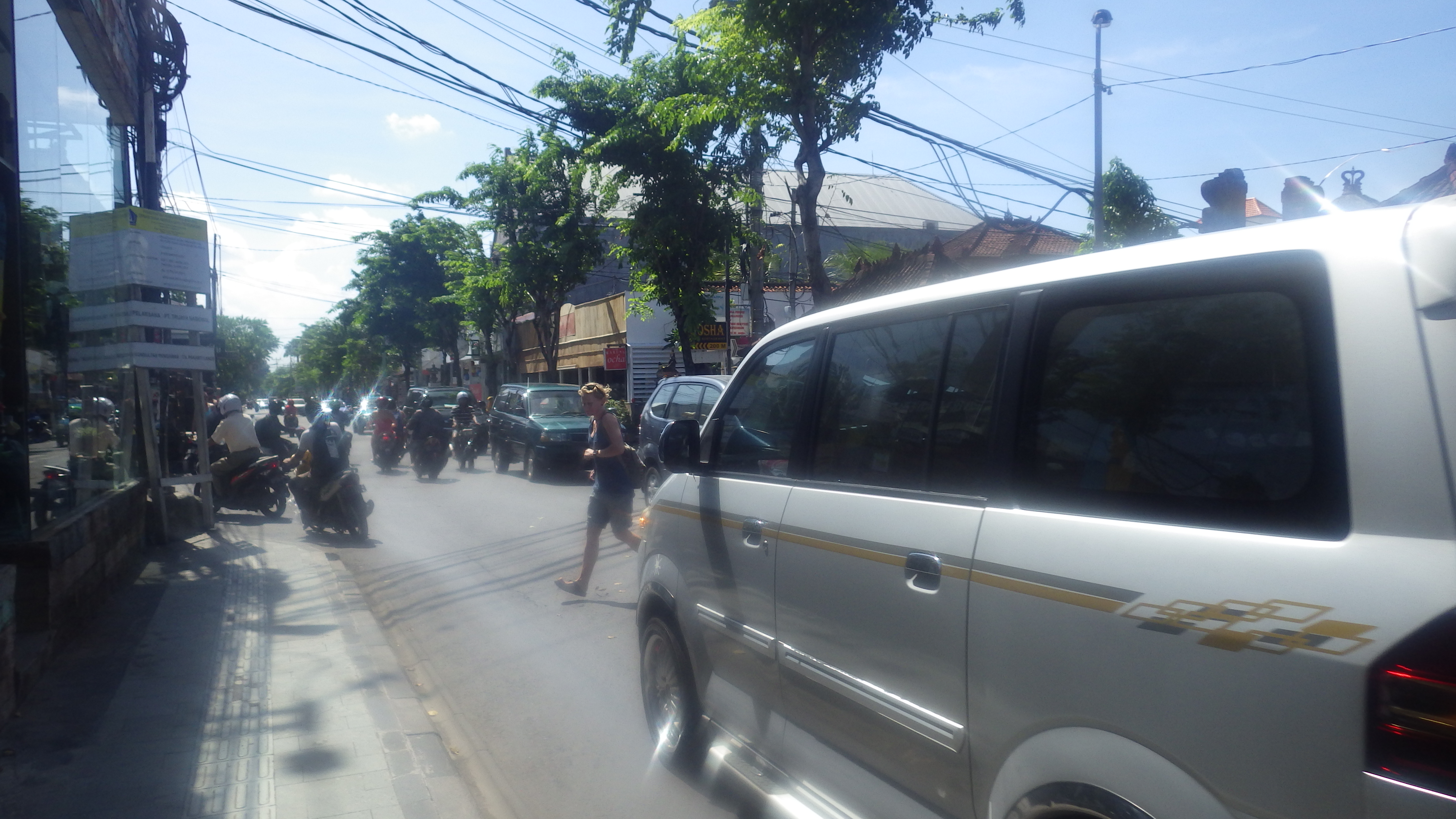
IMGP4729 8. You finally understand why people visiting England from Aisa get such a bad reputation for their crazy road crossing tactics! Pavements rarely exist but where they do, you quickly learn you’re much less likely going to injure yourself walking alongside the unruly traffic than you are constantly dodging the holes, boulders and wires which bed the pavement floors. You also quickly learn that the only way to cross that road in front of you is to take a deep breath and step out into the stream of oncoming verhicles and hope for the very best.

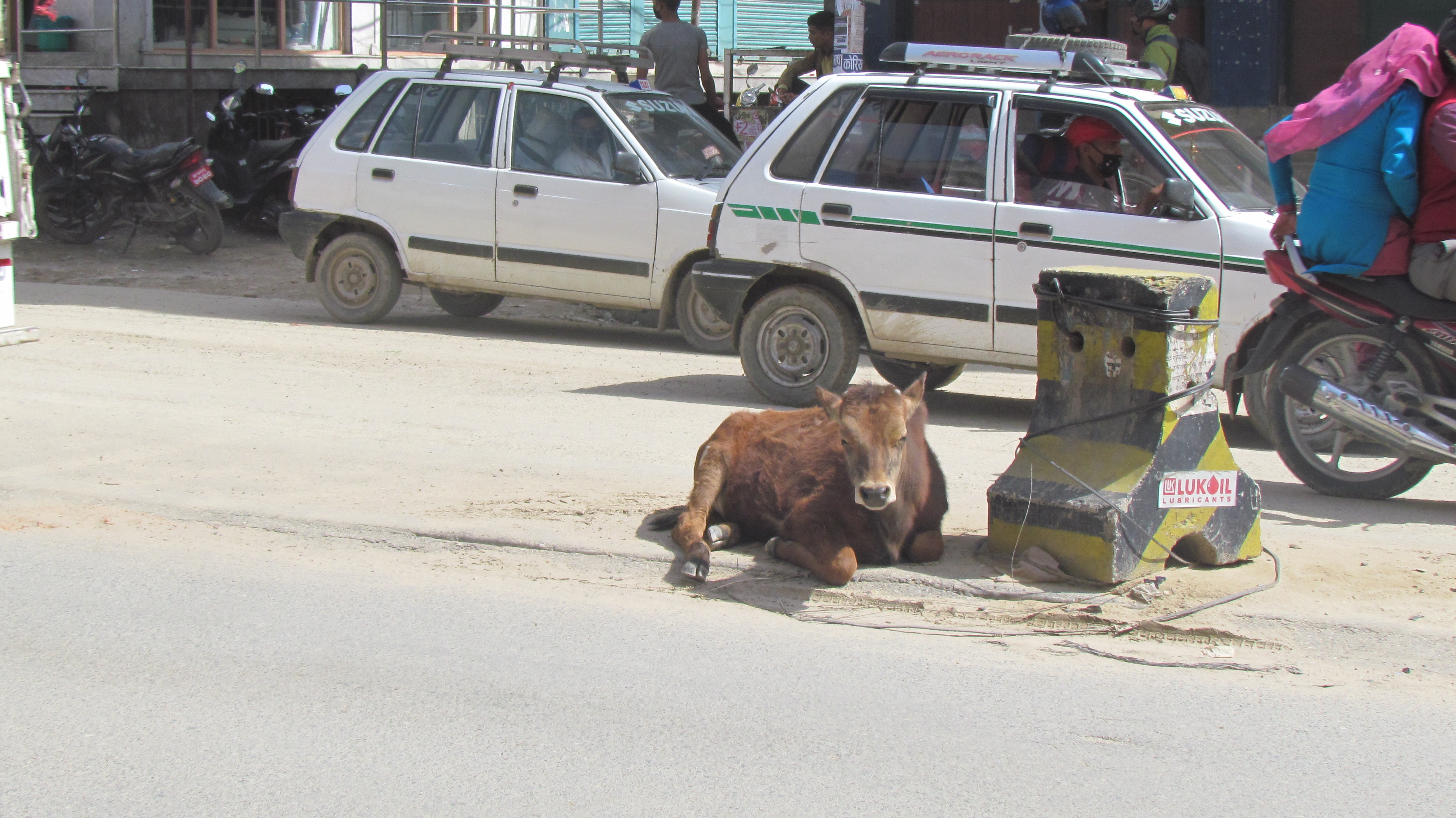
9. You no longer reach for your camera at the sight of a chewing cow sprawled on a dusty track surrounded by honking mopeds and tuktuks in the middle of a city. Its just your average Holy Cow in a street. No biggie.

IMG_3910 IMG_3914

IMG_547610. You have finally learnt to sleep through the deafening sound of 1000 cockerels, 4am prayer calls and the chorus of howls from the entity of the worlds stray dogs… all of which seem to take place every morning, in sync, right outside your bedroom door

An earthquake in Nepal: A shaky start to our Backpacking Adventure

Kathmandu

Yesterday began just like any other day. Sat crossed legged on the straw floor of our bamboo garden hut, we chatted trivially over peanut butter and banana sandwiches about our plans for the day, before waking ourselves up in a spine chilling icy cold shower. It was the average morning of a budget conscious backpacker in Nepal.

Leaving Claire behind to relax in the guesthouse, Danielle and I headed into the main town under a threatening sky, to rummage through the delights of Pokhara’s colourful lakeside stalls.

Inside a dark and dusty shop, stacked high with yak furs and “cashmere” shawls, we stood bartering with a Nepalese man in broken English, a shopping ritual we have quickly become accustomed to. Suddenly the lights in the store flickered on and off, plunging us almost into darkness, before a stampede like rumbling echoed through the open door. Pushing past us mid-sentence without saying a word, the formerly sale-eager owner frantically ran from the shop leaving us and his livelihood behind.

At that moment the street outside burst into a chorus of screams and shrieks from people and animals alike. Locals and tourists ran in all directions eventually forming a sea of bodies down the centre of the road. For a second I stood confused and then as the ground began to tremor beneath my feet, it hit me, this was an earthquake. It was as if my mind had been kicked into survival mode, scanning for falling debris, ground cracks, electric wires, and injured people, I grabbed Danielle by the arm and dragged us into the chaos that now swept the previously relaxed streets of Pokhara. Diving between the masses, we quickly made our way into the crowds and tried to dodge the tangled streams of power lines which now swung wildly over our heads. Our hearts pounding in our chests, we stood huddled together helplessly watching as chaos unfolded around us. It was as if time had stopped. Windows rattled violently in their already crooked wooden frames. Buildings and concrete structures swayed and spewed out bricks onto bystanders below. The unsecured contents of bottle shops tumbled and smashed creating a river of red across the paved walk ways. And then the quake hit its climax. As if standing on the rolling waves of a stormy sea, we were thrown uncontrollably from side to side. The floor visibly shifting in either direction. Random travellers gripped onto us for safety, their faces white with fear.

After what felt like an eternity, the chilling shaking began to ease. Racing back along the main street towards our quaint little guest house where we had left Claire earlier that morning, we passed local men brought to their knees, crying, unable to breathe. Families flocked around women who had passed out, unable to cope with the terror. Groups of hysterical travellers gathered together looking around dazed and in shock. It was a scene I have watched ten times over from the safety of my home in England. But this time it felt real. We were actually amongst it.

Arriving at the guesthouse we were pleased to find Claire and the Nepalese family we are staying with unharmed by the morning’s events. Cut off from TVs; internet and the English language, we sat on a derelict field through the aftershocks with fellow travellers, excitedly sharing stories, completely unaware of the scale of devastation and loss of life that had occurred around us.

Soon after the ground settled, we headed to a Thrakali kitchen in search of Dal Bhat and watched locals glued to hand held radios, but unable to understand the content or ask questions, it was from a local shop keeper that we learnt the true devastation of the quake.

A stomach turning realisation swept over us. This wasn’t a cool or fun experience anymore. This was a serious disaster. People had lost their lives. And we were truly lucky to still be here.

Hours passed before we were able to make contact with friends, family or the outside world. But eventually one by one as Wi-Fi connections were restored, the news began to filter in through the desperate calls and messages of loved ones. ‘7.9 on the Richter scale’. ‘The biggest quake the Himalayas have experience in over 80 years’. ‘Over 1000 dead, many of whom were tourists.’ ‘Avalanches and ice falls have flattened Everest Base camp’.

We were left in total shock. Guilty for feeling thankful that we were safe and well when so many others had lost their lives, and bemused by how a couple of seemingly unimportant, split-second decisions that we had made in the lead up to the quake had been the difference between me writing this blog today or being one of those unfortunate enough to be in the Everest region or Kathmandu at this horrific time.

It’s now just over 24 hours since the first earthquake hit Nepal and the death count continues to rise. We were awakened by a couple more quakes in the early hours followed by a series of tremors, in fact we’ve just had another fairly big one as I write this now. But other than reported road blocks and cut-off water supplies, Pokhara feels unharmed and relatively safe. So for the time being, despite wanting to help with the humanitarian aid in Kathmandu, this is where we will stay.

Our thoughts and prayers go out to all of those who have lost their lives or loved ones in this saddening disaster, to those selflessly risking their own lives to help others, and hoping for the safe return of all those who are lost xxx